Preparing to lead on ambitious outdoor arts projects and programmes, working with local communities, for big impact in rural North Devon
I am an experienced theatre maker who makes fun and playfully provocative outdoor performance and which provides opportunity for people to take part. My shows integrate carefully considered facilitation, to ease people into joining in as active audience members. And increasingly, my work includes space for non-professionals to join as cast and crew members. I have a playful and comic approach, which looks to create a sense of togetherness, here and now, from which to explore big ideas, such as difference, prejudice, loss and failure.
Here are 3 examples of my work – created through Red Herring Productions – from which you can see a development in my participation practice. Please click on the arrows to see a sequence of 3 images.
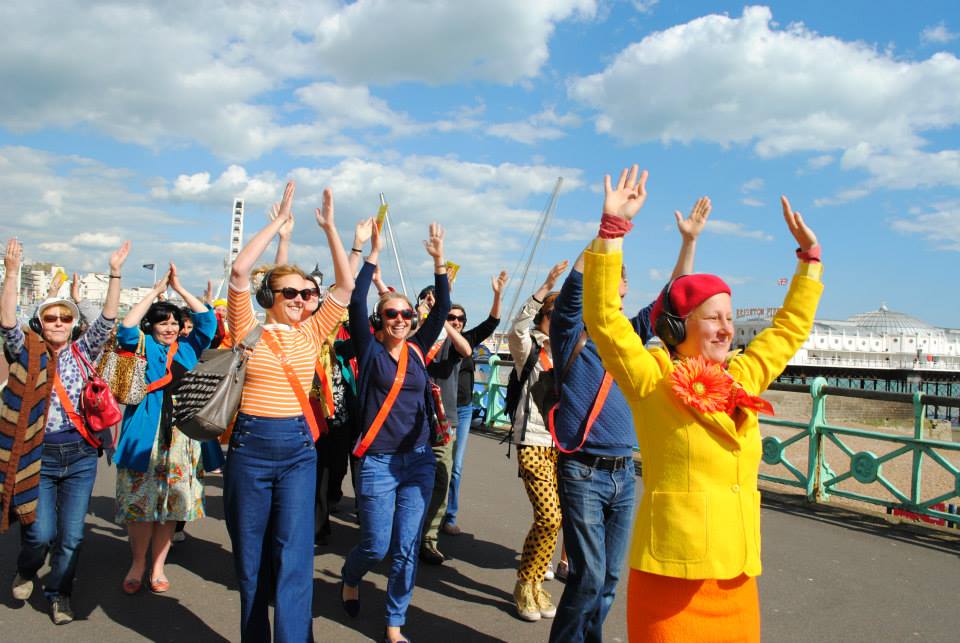

Funny Peculiar, 2015-16. Having made a successful guided tour in Brighton, we adapted the model for touring. In each location – Bath, Margate, Stoke On Trent and Harlow – the team set up base in an empty shop or market stall, with a range of ridiculous activities and academic research available to passers by or delivered through community workshops. This work led to the creation of a bespoke guided tour, unpacking, investigating and celebrating the idea of ‘eccentricity’, with a local group (choir, dance team, ukulele band and inclusive theatre company) joining the show at the end, to create a big musical number. While both elements – the outreach/research and the shows – were very fulfilling, it was rare for the same people to attend. In general, people who met us in the shop, many of whom spent a reasonable amount of time with us and were sometimes repeat visitors, didn’t come to the show. There were clearly barriers to attending, but we were never long enough in each place to mitigate against it. Funny Peculiar: A Guide to Eccentric Britain received funding from Arts Council England for strategic touring in 2015, produced by Time Wont Wait (images are still used on the ACE website).
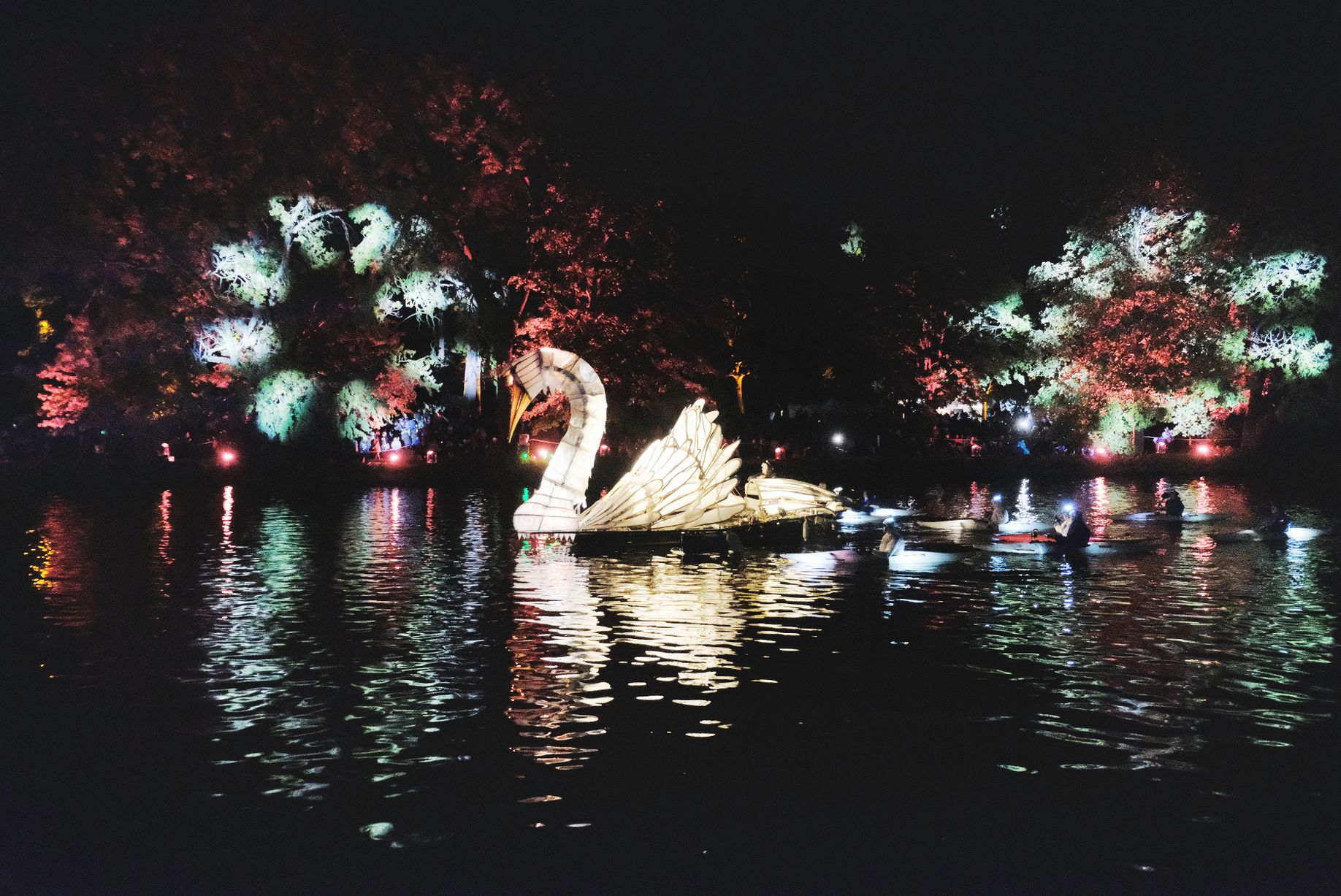
The Whistlers, 2020- involves the creation of a fictional narrative about a culture of people who live in the woods and communicate by Whistling, with an aim to draw people into natural spaces and consider the ‘more than human’ perspective. This project was commissioned by Green Carpet European Consortium in 2020, which encouraged artists to engage with and respond to input from local communities. Our work was heavily impacted by Covid and we were unable to do the depth of engagement that we had planed. However, it was clear that where we were able to meet with people around the show, posing as members of the fictional Whistler Conservation Society or by working with us on the site, the audience’s experience of the show was deeper and more connected. The best model was at the small village of Beauquesne, near Amiens, brilliantly supported by the creative team from local producers Cirque Jules Verne. The primary school, a pupil referral unit, the community centre and various volunteers (a considerable proportion of the community) became immersed in our world for a week and many heart warming moments ensued. Due to another hurdle – this time the death of Queen Elizabeth – we were unable to produce a version of this show locally although it has toured more widely.
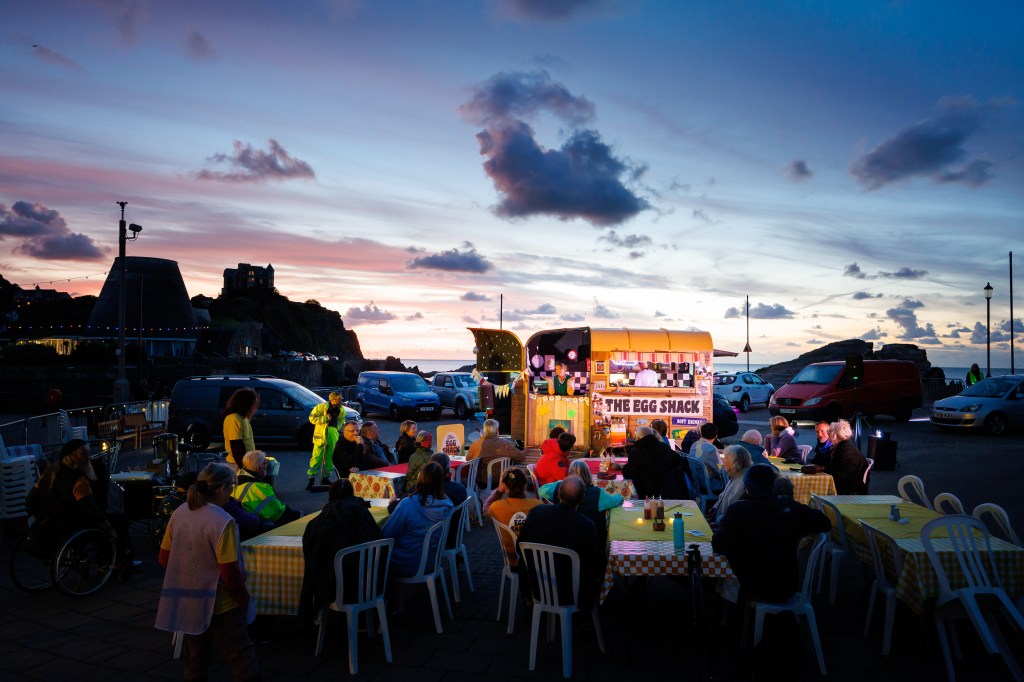
The Egg Shack – is the most recent Red Herring Production, commissioned by Landmark Theatres and presented as part of Red Herring’s Stepping Out Festival in Bideford and at the Landmark Welcome Weekender in August / September 2024. We started with conversations and workshops with community groups, facilitated through a partnership with Libraries Unlimited. For the show itself, audiences arrive in the warm and humorous setting of a street cafe. They meet the proprietor and her less than polished staff, played by a community cast, trained across a series of workshops. From here they are taken into the carpark, where they step inside or around a series of vehicles, meet some characters and dip into their lives. The show is a miscellany of experiences with a range of atmospheres, blending light and dark, extrovert and held, with the audience switching between roles and more passive positions. Each group sees a selection of the material and no-one sees it all. The result is rich and curious and the audience are brought together to chat about it over cups of tea and egg butties. While this show was a big hit with audiences, again there was little translation from community workshops to show attendance. This is an issue I wish to resolve now – to make sure that our work is as accessible as possible and succeeds in connecting with more people.
These projects demonstrate a breadth of learning through relatively small-scale work. Both Funny Peculiar and The Whistlers were touring projects, whereas the Egg Shack was our first show made in Devon and reflecting local research. In order to grow local audiences, people have to feel more connected to the work that I make. As a freelancer who is used to travelling a lot, my local impact would be greatly aided if I could work more locally, with a regular participative practice that builds trust, enthusiasm and advocacy.
Recent experience, especially with Walk the Plank (Performance Director for Midsummer Mystery for Bodo European City of Culture 2024; Creative Director for ‘Green Space Dark Skies iteration in Exmoor’ and ‘Community Director for Reading 2017’) has helped me to envisage myself as someone who can lead on a programme of work that integrates large numbers of people into a show format – a process that sees audiences engage actively, following unfolding storylines and helping to build up a sense of expectation before a final event and which takes some through a progression route from workshops to performing.
This funding application helps me to capitalise on my experience, to learn from a range of artists, through a programme of coaching and mentoring, to explore different ways to map a performance on a place and to test facilitation techniques. Of course a big challenge presents itself around limited financial resources available for large-scale work and I will consider how to make good use of people and time to make stronger, more impactful work, which connects with larger groups of people in rural North Devon.


 Paschale Straiton